
Directive Dir 2000-07: Conducting Confined Research Field Trials of Plants with Novel Traits in Canada
This page is part of the Guidance Document Repository (GDR).
Looking for related documents?
Search for related documents in the Guidance Document Repository
This directive will be updated as required. For further information or clarification, please contact the Canadian Food Inspection Agency (CFIA).
On this page
- 1.1 Introduction
- 1.2 Scope
- 1.3 Novelty
- 1.4 Risk management
- 1.5 Generation of data for environmental safety assessments of PNTs for unconfined releases
- 1.6 Definitions
2 Application process for confined research field trials of PNTs
- 2.1 How to apply for new confined research field trials of PNTs
- 2.2 The presence of endangered species at the trial site
- 2.3 How to apply for renewal of confined research field trials of PNTs
- 2.4 Where to apply
- 2.5 When to apply
- 2.6 Fees
- 2.7 Information considered confidential
3 Conditions of authorization of confined research field trials
- 3.1 General and species-specific terms and conditions for confined research field trials
- 3.2 Restrictions on the size and number of confined research field trial sites
- 3.3 Reproductive isolation of confined research field trials
- 3.4 Maps and GPS coordinates
- 3.5 Chemical treatment notice
- 3.6 Equipment cleaning
- 3.7 Records and reporting of confined research field trials
- 3.8 Disposal and storage of plant material from confined research field trials
- 3.9 Post-harvest land use restrictions
- 3.10 Local wildlife management
- 3.11 Inspection of confined research field trials
- 3.12 Special cases
- 4.1 Importation of PNT
- 4.2 Notification of the Animal Feed Division of the Canadian Food Inspection Agency
- 4.3 Notification of Health Canada
Appendix I Confined research field trial application form
Appendix II Fee submission for confined research field trials
Appendix III General terms and conditions for confined research field trials
Appendix V Minimum monitoring frequency for confined research field trials
Appendix VI Trial site diagram
Appendix VII Non-compliance and corrective actions
1 General information
The Seeds Act is administered by the Plant Health and Biosecurity Directorate of the Canadian Food Inspection Agency (CFIA) and provides authority to regulate the quality, testing, inspection and sale of seeds in Canada. The Seeds Regulations, Part V - Release of seeds, defines the regulatory requirements for both confined and unconfined environmental release of plants with novel traits (PNTs) in Canada. The Plant Biosafety Office (PBO), CFIA is responsible for regulating the intentional introduction of PNTs into the environment in Canada.
By definition:
A PNT is a plant into which a trait has been intentionally introduced that is new to plants of the same species cultivated in Canada and has the potential to affect the specific use and safety of the plant with respect to the environment and human health. These traits can be introduced using biotechnology, mutagenesis or conventional breeding techniques and may have some potential to impact weediness, gene flow consequences, plant pest potential, non-target organisms, or biodiversity.
PNTs that are not approved for livestock feed, human consumption and unconfined release into the environment, must be released under confinement in order to minimize any risks the PNT may pose to the environment, livestock and human health.
1.1 Introduction
Consistent with the Canadian approach to regulation of novel products, the CFIA recognizes that it is the presence of a novel trait in a plant that potentially poses environmental risk, as opposed to how the trait is introduced.
In Canada, a confined research field trial of PNTs is the release of a PNT in the environment, for research purposes, under terms and conditions of confinement. These terms and conditions of confinement include, but are not limited to, reproductive isolation, site monitoring, and post-harvest land use restrictions and are designed to minimize the exposure of the PNT to the environment.
The confined research field trial program provides developers with the opportunity to:
- Evaluate the performance of PNTs,
- Study the environmental safety of these modified plants,
- Address the criteria and information requirements considered in the environmental safety assessment of PNTs for unconfined releases, or
- Generate data for variety registration purposes.
1.2 Scope
The purpose of this Directive is to provide guidance to applicants regarding the regulatory requirements of Part V of the Seeds Regulations for authorization of confined research field trials of PNTs for research purposes. It also summarizes the information requirements and procedures used by the Plant Biosafety Office (PBO) of the Plant Health and Biosecurity Directorate, CFIA, and where appropriate, other federal and provincial agencies. It considers only field trials of imported or domestically developed PNTs released into the environment under terms and conditions of confinement.
The information presented in this Directive does not preclude additional regulatory requirements from other sections of the CFIA or other government agencies (see Section 4 for further information). If in doubt, please contact the Plant Biosafety Office at PBO@inspection.gc.ca to verify if these guidelines apply to your material.
1.3 Novelty
The components of novelty are different for plants with novel traits, novel feeds, and novel foods, because the risks associated with each are somewhat different. Applicants have the responsibility for determining the novelty of their products. Environmental release of PNTs requires authorization from the PBO, while novel feeds are regulated by Animal Feed Division, CFIA, and novel foods by Health Canada.
The PBO has guidance on its web site on determining when a new plant is a PNT, which can be found at Directive 2009-09: Plants with novel traits regulated under Part V of the Seeds Regulations: Guidelines for determining when to notify the CFIA. To ensure compliance with all directives and guidelines, consultation with the PBO and Animal Feed Division of the CFIA, or with the Novel Foods Section, Health Canada is encouraged.
1.4 Risk management
General and species-specific terms and conditions of authorization are imposed by the PBO, on a case-by-case basis, on confined research field trials in order to keep the plant material confined (see section 3.1). Elements factoring into the risk of a breach in confinement include the species of PNT, the new trait, the confinement methods chosen by the proponent and their compliance history. The PBO may refuse to authorize or may restrict the scope of the release of a PNT where the proposed confined release poses an unacceptable risk to the environment and/or animal and/or human health, or there is a reasonable risk of not meeting the confinement conditions.
In addition to the terms and conditions of authorization, each confined research field trial submission is subject to restrictions on the size and number of sites per province and to a maximum cumulative hectarage per province (see section 3.2). Restrictions on the size and number of trials are in place to mitigate the exposure of the PNT material to the environment.
1.5 Generation of data for environmental safety assessments of PNTs for unconfined releases
Applicants considering future commercialization of a PNT for eventual release into the environment without confinement are encouraged to include experiments designed to meet the information requirements of Directive Dir94-08 "Assessment Criteria for Determining Environmental Safety of Plants with Novel Traits". Specifically, such experiments could contribute to generating data which could be used to address the five key criteria of environmental safety assessments:
- Altered weediness potential,
- Gene flow consequences,
- Altered plant pest potential,
- Impact on non-target organisms, and
- Other impacts on biodiversity.
Applicants for confined research field trials should keep in mind that data generated for a determination of environmental safety under Dir94-08 must be produced using statistically valid experimental designs and protocols (i.e. equivalent to the standards required for inclusion in peer-reviewed research publications). In making an application for the unconfined release of a PNT, proponents will be required to submit details of field trial protocols, including experimental designs and sampling procedures. Trials must be conducted in a manner consistent with the proposed farming practices of the PNT.
1.6 Definitions
Applicant: The applicant must be a permanent resident or a citizen of Canada. The applicant is not required to be the breeder or owner of the PNT; however, if the applicant is not the breeder/owner, a signed statement is required from the breeder/owner authorizing representation by the applicant. If a foreign organization intends to conduct field trials in Canada, arrangements must be made with a permanent resident or citizen of Canada who will act as the applicant. All correspondence with respect to the application, including authorization of trials, will be addressed to the applicant. The applicant must accept full responsibility for compliance with all terms and conditions of authorization.
Application: An application is the data package submitted for each modified plant species intended for a confined release and which meets the information requirements of this Directive. More than one submission and more than one trial site may be included in a single application.
Buffer zone: The 10 m (50 m if commercial-scale equipment is used for harvest) area surrounding the trial site that must be monitored during the post-harvest restrictions period.
Construct: An engineered DNA fragment (e.g. plasmid) which contains, but is not limited to, the DNA sequences to be integrated into a target plant's genome.
Field trial: An experimental trial of one submission, grown at one trial site for the purpose of conducting research.
For example:
- Two different lines of a plant species, such as canola (Brassica napus), one showing tolerance to the herbicide sulfonylurea resulting from the insertion of the gene encoding for an altered acetolactate (ALS) enzyme, and the other showing tolerance to certain insects by the insertion of the d-endotoxin gene from Bacillus thuringiensis, both to be grown in the same field trial site in one year will be considered as two field trials.
- Two different lines of tobacco, each containing a different genetic construct, both showing tolerance to the herbicide sulfonylurea, both to be tested in a confined research field trial site in one year will be considered as two field trials. A separate assessment will be carried out on each of the two different genetic constructs.
- Flax modified to be resistant to a specific herbicide as a result of one specific gene insertion, to be tested for agronomic performance in confined research field trials at six locations will be considered as six field trials.
- The same modified soybean to be tested at the same six general locations over two growing seasons will constitute 12 field trials.
- A perennial crop such as alfalfa, tested at one site over a period of several years, will be counted as one trial for each year it is tested.
- A single soybean line created by transformation with two genetic constructs (or created through crosses between two regulated PNTs), planted at a single location, will be considered to be two field trials. A separate assessment will be carried out on each of the two different genetic constructs.
- A previously-approved PNT transformed with a new construct, and planted at a single site is considered to be a single trial.
Gene flow: The transfer of genetic material through interbreeding between sexually compatible plants.
Plant molecular farming: The use of novel plants for producing industrial or pharmaceutical compounds that may make the plants unsuitable for their traditional uses (e.g. food and feed). These compounds are known as plant-made industrial products (PMIPs) or plant-derived drugs (PDDs).
Plant with novel traits (PNT): Plant into which a trait has been intentionally introduced that is new to plants of the same species cultivated in Canada and has the potential to affect the specific use and safety of the plant with respect to the environment and human health.
Reproductive isolation: Refers to any methods used to minimize the risk of production of progeny between the trial plants in a confined research field trial and any other sexually compatible plants. It also applies to any methods used to limit the spread of the trial plants out of the trial site.
Secure container: Any means by which seed and any other propagable plant material may be contained for transport and storage such that a spill and/or dissemination cannot occur. The container must be labelled.
Seed: A "seed" as stated in the Seeds Act is defined as follows: Any plant part of any species belonging to the plant kingdom, represented, sold or used to grow a plant (Seeds Act).
Submission: A submission refers to each plant species/genetic modification combination. For example, two lines of the same plant species transformed with different constructs constitute two submissions. Two lines of the same plant species transformed with the same construct will constitute one submission, provided the two lines express the traits encoded by the construct in a similar fashion. In the case of one line transformed with two different constructs, this constitutes two submissions.
Trait(s): The phenotypic characteristic(s) conferred to the recipient plant by specific genetic changes.
Trial site: Confined area where the trial plants are released into the environment. The trial site is a single, unbroken geographical location. It does not include the isolation distance or buffer zone. Several field trials can be planted at the same trial site.
Unconfined release: A release into an environment of a plant with novel trait(s) that is not isolated either reproductively or physically from managed or natural environments, but may be subject to other restrictions.
2 Application process for confined research field trials of PNTs
The information requirements for confined research field trials are described on the confined research field trial application form presented in Appendix 1. Applicants can submit their applications either by e-mail or by regular mail (see section 2.4). The application form must be completed in full to ensure timely evaluation and to minimize requests for further information. It must be provided in one of Canada's two official languages: French or English. Application forms for new confined research field trials and renewals of previously authorized confined research field trials of PNTs are required and must be submitted to the PBO for review in order to receive authorization for planting.
The applicant engaged in a confined research field trial must be a permanent resident of Canada. The applicant must accept full responsibility for compliance with all terms and conditions of authorization. Where a confined research field trial must be terminated, the applicant is responsible for the cost(s) of disposal of the PNT. Furthermore, the applicant is also responsible for the cost(s) of all remedial actions required in the event of an accidental release of the PNT. Applicants must not undertake confined research field trials unless they have been explicitly authorized by the PBO.
While the PBO will exchange information with the Plant and Biotechnology Risk Assessment Unit and the Animal Feed Division of CFIA, the Pest Management Regulatory Agency (PMRA) and the Novel Food section of Health Canada, where required, it is the applicant's responsibility to ensure that all requirements of these departments are met directly (see Section 4 for further details). If there is any question as to whether these departments need to be involved, applicants are encouraged to consult with the PBO early in the application process, and to be prepared to provide any necessary data at least 90 days before the anticipated planting date, to avoid planting delays.
2.1 How to apply for new confined research field trials of PNTs
The confined research field trial application addresses the information requirements and must be submitted by the applicant to the PBO. The application form is available in Appendix 1. The potential adverse environmental impacts associated with the confined research field testing of the PNT must be identified in the application. The risk assessment of the proposed trial takes into account the information submitted regarding the novel gene product (toxicity and allergenicity), the transformation method, the characteristic of the novel trait, the altered plant characteristics of the PNT, the ecosystem and geographic location of release, the indigenous species present at the trial site and the trial protocol.
The onus is on the applicant to ensure that the confined research field trial will not negatively affect the environment, including any other trial or non-PNT crop(s). The PBO requires that each applicant (i) determine what plant material, if any, will be in proximity to each trial (including within the isolation distance) before the confined research field trial is planted, and (ii) consider contingency plans in the event of accidental release of material or inadvertent breakdown in reproductive isolation. These contingency plans must include immediate notification of regulatory authorities and commodity handlers, and provide for monitoring, tracking, recall and destruction of accidentally-released plant material from the environment and/or food or feed supply chains.
2.2 The presence of endangered species at the trial site
It is important to know if there are any endangered species at or near the trial site which could potentially be affected by the confined research field trial. To obtain information on endangered species contact:
Canadian Wildlife Service
COSEWIC Secretariat (Committee on the Status of Endangered Wildlife in Canada)
351 St-Joseph Boulevard
Hull, Quebec, K1A 0H3
Tel.: 819-953-3215
Fax: 819-994-3684
cosewic-cosepac@ec.gc.ca
2.3 How to apply for renewal of confined research field trials of PNTs
Renewals of authorization for confined research field trials, including ongoing trials of perennial PNTs, may be granted for trials that are identical (i.e. same species, same construct, and in exactly the same location) to those approved in previous years.
The PBO must be notified in writing of an applicant's intent to renew a previously authorized confined research field trials, each year following the initial approval of the field trial. An application form for renewal of previously authorized confined research field trials of PNTs is required, and must be submitted to the PBO for review. The application form is presented in Appendix 1.
The terms and conditions of authorization required in previous years still apply; however, the CFIA reserves the right to modify, add, or remove any condition of authorization upon renewal, and any changes will be communicated to provincial and other federal authorities.
It is the responsibility of the applicant to ensure that all regulatory requirements of any other sections are met directly for the renewal of application (see Section 4 for further information).
2.4 Where to apply
Applications must be sent directly to the CFIA's Pre-market Application Submissions Office (PASO). Applicants can submit their applications either by e-mail at cfia.paso-bpdpm.acia@inspection.gc.ca or by regular mail at:
Pre-market Application Submissions Office (PASO)
Canadian Food Inspection Agency
59 Camelot Drive
Ottawa, ON K1A 0Y9
Canada
Phone: 1-855-212-7695
Fax: 613-773-7115
Email: cfia.paso-bpdpm.acia@inspection.gc.ca
Please be sure to CC the PBO on all application submissions at PBO@inspection.gc.ca.
2.5 When to apply
Applications for field trials should be received by the PBO at least 30 days before the expected planting date in order to receive authorization on time for planting. For renewals, applications should be received before the anniversary date of the original application. Incomplete applications may require additional processing time due to further information requests. Applications are processed on a first-come, first-served basis. Failure to submit all the required information may make it impossible to receive authorization on time for planting.
However, applications for confined research field trials of PNTs not intended for general food or feed use (for instance plant molecular farming) using crop species traditionally used for food or feed require additional time for assessment of potential risks to food and feed supplies by Health Canada or the Animal Feed Division of CFIA. Please consult section 3.11.1 for further detail. Note that Health Canada and the Animal Feed Division of CFIA require 60 days for this assessment. Where submitted data is incomplete, additional data will be requested and a new 60 day assessment period will commence once the additional data is received. Applicants are encouraged to consult with the PBO as early as possible to avoid planting delays.
Please consult section 4 of this document for other regulatory requirements.
2.6 Fees
Please see Appendix 2 for a schedule of fees for the review and authorization of confined research field trials of PNTs. For a new application, the applicable fee is calculated based on the number of submissions (genetic constructs) included in the application and the number of trial sites.
The submission fee ($400 per submission) must be included with the application. The review and processing of an application will only commence once the PBO receives the payments. Once review of an application has been initiated, the submission fee will not be refunded.
Please ensure that you fax your completed fee form or call PASO (section 2.4) with payment information as completed fee forms will not be accepted via email.
Authorization will not be issued until PBO receives payment for trial sites ($100 per trial site). These fees will not be refunded after an authorization letter has been issued.
For a renewal of authorization, the applicable fee is calculated and due each year that the trial is requested. A renewal fee of $100.00 per submission will apply in addition to the $100 fee per trial site. Renewal fees will only apply to those trials meeting the renewal criteria outlined in section 2.3.
2.7 Information considered confidential
The personal information provided in a confined research field trial application is collected by the CFIA under the authority of the Seeds Act to evaluate the potential risk to the environment posed by the proposed trials. Personal information will be protected under the provisions of the Privacy Act and will be stored in Personal Information Bank CFIA PBO 010. Information may be accessible or protected as required under the provisions of the Access to Information Act or the Privacy Act. Please contact the CFIA's ATIP Services at 613-773-2342 for additional information.
Non-confidential information includes the organization's name, trial codes, crop(s), a general description of the trait(s) being field tested and the province(s) in which the trials are located.
2.7.1 Provincial government notification
The PBO will send non-confidential information about each trial to designated provincial government contacts in those provinces where proposed trials are to be conducted or renewed. Provincial governments, as well as their mandated organizations, have a 30 day comment period, and any comments are considered by the PBO in the final evaluation of the application.
If provincial government representatives request additional information on the proposed trials, the PBO will contact the applicant in order to determine which information can be shared with provincial governments.
2.7.2 Website summaries of authorized confined research field trials
Non-confidential information about confined research field trials is made available to the public upon request and on the PBO's website at: Plants with Novel Traits (PNTs) - Approved confined research field trials / Terms and conditions.
The timing of the disclosure of this information is at the discretion of the CFIA.
| Organization | Crop | Trait 1 | Trait 2 | Trait 3 | Province |
|---|---|---|---|---|---|
| Suncropgen Inc. | Corn | Insect resistance | Fungal resistance | Selectable marker | Ontario |
3 Conditions of authorization of confined research field trials
3.1 General and species-specific terms and conditions for confined research field trials
The terms and conditions include, but are not limited to, reproductive isolation, site monitoring, and post-harvest land use restrictions. See Appendix 3 for general terms and conditions that will be imposed on all trials. To view species-specific terms and conditions please refer to the PBO website at: Plants with Novel Traits (PNTs) - Approved confined research field trials / Terms and conditions.
When planning trials, please refer to the most recent information available from the PBO. The PBO may alter the terms and conditions from year to year based on the most recent scientific data. Applicants are encouraged to view these terms and conditions as minimum requirements. The PBO may amend terms and conditions on a case-by-case basis depending on the PNT used in the trial and the risk associated with its release under confined conditions. For example, for plant molecular farming trials, the minimum isolation distances to food or feed crops are twice that normally prescribed for the species, and four times the distance normally required from crops grown for seed production. Minimum distances between plant molecular farming trials and pasture are also required.
It is solely the applicant's responsibility to ensure compliance with the terms and conditions of authorization, including the conduct of any subcontractors. The applicant must ensure that the field managers are familiar with, and have a copy of, the terms and conditions under which the trial was authorized. Each case of non-compliance will be treated by the PBO on a case-by-case basis. Examples illustrating the type of corrective actions that PBO may require are available in Appendix VII.
The applicant must ensure that PBO has the proper contact information for the individuals conducting the trials.
Plants of the same species grown on the trial site, such as control plots and border rows, are considered to be PNTs and are subject to the terms and conditions of authorization of the trial.
The PBO strongly recommends that applicants notify neighbours that have land surrounding the trial site and which may be affected in the event of a breakdown in reproductive isolation.
The Minister has the authority to deny an authorization to conduct confined research field trials where it is believed that an applicant may not comply with the terms and conditions required for the confined research field trials. For example, in cases where an applicant has a history of breaching the terms and conditions of confined research field trials, authorizations could be denied, or the size and number of research trials could be restricted.
3.2 Restrictions on the size and number of confined research field trial sites
In Canada, confined research field trials of PNTs provide researchers with the opportunity to evaluate the PNTs in the field under conditions which minimize their exposure to the environment. The confined research field trial program is only for research purposes and is not intended to support other activities such as seed multiplication for commercial purposes. In order to maintain the integrity of this system, each confined research field trial submission is subject to restrictions on the size and number of sites per province and on the cumulative hectarage per province. More specifically, confined research field trial sites are limited to no more than:
- 1 hectare per trial site,
- 10 trial sites per submission per province (includes locations submitted in new applications and renewal of authorizations),
- 5 hectares cumulative per submission per province (includes locations submitted in new applications and renewal of authorizations).
For example, in one province an applicant may choose to grow:
- one line (submission) of a plant species at 5 trial sites. The trial sites are 1 hectare each or less.
- one line of a plant species at 10 trial sites. The trial sites are 0.5 hectare each or less.
The above restrictions still apply in situations where the confined research field trial is part of variety registration and/or performance trials. Exemptions from the restrictions may be granted, but only for research purposes. Along with their application, the applicant must submit to the PBO a rationale for the exemption and a precise description of management practices that will be put in place in order to mitigate the additional exposure to the environment. In addition to the rationale submitted by the applicant, PBO may consider other factors in its decision to grant exemptions from these restrictions. Compliance history of the applicant, crop type and geographical factors are among the considerations that may be taken into account. Exemptions granted from the trial site size limit may involve additional restrictions on the number of sites that can be authorized.
If an exemption for trial size and number is granted, the PBO may request that the proponent keep seed as reference material from each line of the trial for 7 years after all restrictions are lifted.
3.3 Reproductive isolation of confined research field trials
In order to minimize potential gene flow, it is necessary to reproductively isolate all PNTs from neighbouring related commercial crops, breeding nurseries, seed multiplication plots, other trials, and sexually compatible wild relatives. This may be done through isolation distances or alternative methods.
The PBO strongly recommends that applicants notify neighbours that have land surrounding the trial site that their crops may be affected in the event of a breakdown in reproductive isolation.
3.3.1 Minimum reproductive isolation distances and destruction zones
The most common means to achieve reproductive isolation is through the use of spatial isolation distance between the plants of the trial and neighbouring sexually compatible plants. Minimum isolation distances have been established through consultation with academics, scientists, and other stakeholders, using requirements adapted from the Canadian Seed Growers Association (CSGA) for producing pedigreed seed crops.
It is the responsibility of the applicant to ensure that the conditions for the reproductive isolation of all trials are met.
Should the same or related species be found within this isolation zone the applicant must remove them immediately. If inadvertent pollination/hybridization and seed set occur, additional post-harvest land use restrictions and monitoring requirements will be imposed.
The PBO reserves the right to impose greater minimum isolation distances for trials of PNT expressing traits that may have the potential for high environmental, food or feed safety issues if released. The PBO also reserves the right to impose minimum distances to food or feed crops and to pasture and to seed production.
A diagram of a trial site and isolation distance is presented in Appendix VI.
3.3.2 Alternative reproductive isolation methods
Applicants who choose alternative methods for reproductive isolation must ensure that they will have control over the appropriate reproductive isolation distance around each trial site, in the event that the alternative method fails to provide reproductive isolation. The use of an alternative reproductive isolation method must take into account neighbouring fields and any potential financial implications to their owners.
The following alternative methods may be available to reproductively isolate specific PNTs:
- Harvest of plants before flowering requires close monitoring at the onset of flowering.
- Bags, nets or cages placed over flowering plants to prevent pollen exchange, provided that scientific rationale is provided in writing in the application to justify the effectiveness of such measures.
- Removal of floral parts before pollen maturity.
If an applicant chooses an approved alternative method of reproductive isolation other than the minimum required isolation distance, and if that method fails to prevent potential pollination/hybridization and seed set in plants outside the trial, then current season and post-harvest monitoring and restrictions may also apply to the isolation distances.
For example, if an applicant chooses to ensure reproductive isolation of a Brassica rapa trial by netting the PNTs, and if the netting fails to prevent pollen movement, a 400 m isolation distance around the B. rapa trial will be imposed. It is the applicant's responsibility to ensure that all the terms and conditions related to the isolation distance, including destruction of any B. rapa or related species, are met.
3.4 Maps and GPS coordinates
Maps and GPS (Global Positioning System) coordinates for all confined research field trials and disposal sites are a prerequisite of authorization and must be supplied to the PBO, i.e. maps and GPS coordinates must not be submitted to CFIA inspectors or area staff. The PBO recognizes that exact trial locations may not be finalized at the time of submitting the application. Applications without exact trial locations will be accepted if:
- The application includes the general location (to the nearest town), the expected planting date, the number of trial sites within each general location, and
- The legal land location is subsequently submitted. The PBO will not authorize a confined research field trial until information detailing the legal land location of each trial site has been given.
Geographic factors should be considered when selecting the exact trial site location. For example, the tendency for soil erosion and the proximity to natural ecosystems and waterways should be considered in order to minimize the risk of dissemination of novel traits into the environment.
Any changes to confined research field trial sites made subsequent to authorization must be received by the PBO on or before May 15th (spring planting) or August 1st (fall planting) of the year of application. After this date, trial site changes will not be accepted with the exception of cancellations. If a trial site change is made after May 15th (spring planting) or August 1st (fall planting), authorization of the trial will be revoked and the trial will have to be destroyed.
3.4.1 Maps
It is the responsibility of each applicant to provide a detailed and complete field map of each confined research field trial site as well as detailed directions to the site, within 7 days after all planting is completed. In the case of a renewal, when a complete map has already been submitted with the application, the applicant must forward to the PBO the exact planting date of the trial, within 7 days after all planting is completed. The applicant must also provide a detailed and complete map of the disposal site location as well as detailed directions to the site within 15 days after disposal.
Maps of confined research field trials and disposal sites must be legible and precise so that CFIA inspectors do not encounter problems locating trials and disposal sites, particularly in post-harvest years. Maps should be created electronically, with white background, crisp line drawings and block letters. The use of colours should be avoided. Maps on lined or graph paper will not be accepted. Photocopies or scans of road maps may only be used as a reference for directions to the field. It is recommended to submit the maps electronically via email to PBO@inspection.gc.ca.
For each field trial map the following information must be clearly printed:
- The inspection number designated by PBO (e.g., 19-ORG1-CAN-SK001-01);
- The general location of the field trial (city/town/province);
- The legal land location;
- Compass directions, with North at the top of the page;
- GPS coordinates in the appropriate format (i.e. latitude, longitude, decimal, degrees, see section 3.4.2 for further GPS coordinates requirements);
- Measurements from permanent surrounding landmarks must be provided for precise location of the site;
- Exact trial dimensions in metres. PBO strongly recommends that markers be placed at all corners of the trial site for the growing seasons of both the trial and the post-harvest restriction period in order to facilitate the identification of the confined research field trial boundaries;
- The name and phone number of the field contact;
- Surrounding crops, particularly those that may lie within the isolation distance. When applicable, show previous year's trial sites on the map(s);
- The planting date of the trial.
For each disposal site map the following information must be clearly printed:
- The inspection number designated by PBO (e.g., 19-ORG1-CAN-SK001-01);
- The general location of the field trial (city/town/province);
- The legal land location;
- Compass directions, with North at the top of the page;
- GPS coordinates in the appropriate format (i.e. latitude, longitude, decimal, degrees, see section 3.4.2 for further GPS coordinates requirements);
- Measurements from permanent surrounding landmarks and access points must be provided for precise location of the site;
- The name and phone number of the contact person responsible for the disposition of the material.
3.4.2 GPS coordinates
It is the responsibility of each applicant to submit the GPS (Global Positioning System) coordinates of each confined research field trial site to the PBO within 7 days after planting. The PBO reserves the right to cancel the authorization of any confined research field trial for which GPS coordinates have not been received within seven days after the site is planted.
GPS coordinates must be taken precisely at all corners of each trial site and provided in the latitude longitude decimal degree format (degree only format) e.g. Lat 37.39941, Long 122.01816. Most of the economically priced units have the option to provide readings in this format. GPS coordinates will be used by CFIA inspectors to assist in locating the trial sites for current year and post-harvest inspections.
Minimum Recommended GPS Unit Requirements:
- Accuracy: 1-5 metres
- Datum set: WGS84
- Latitude longitude decimal degree format (degree only format – hddd.ddddd) e.g. Lat = 37.39941, Long = -122.01816
- Wide Area Augmentation System (WAAS).
3.5 Chemical treatment notice
If a chemical treatment is used on the trial site that requires a time until safe entry, a sign must be posted at the point of entry to the trial indicating the date and time of spraying as well as the time until safe entry. This condition is intended to protect the health and safety of the CFIA inspection staff.
3.6 Equipment cleaning
Seeding, transplanting, harvesting and site maintenance machinery and equipment (including clothing) must be cleaned at the trial site prior to being moved to other locations. This is to prevent dispersal of plant material, especially propagable plant material and pollen. Any material collected during cleaning must be destroyed according to the terms and conditions.
3.7 Records and reporting of confined research field trials
Records of all confined research field trials, including current season and post-harvest site activities, must be maintained by the applicant and kept for at least 7 years after the post-harvest land use restrictions are completed, and must be made available to the CFIA upon request. Records can be maintained in electronic format, but a paper copy must be made available to the CFIA inspector upon request. Records must include information on transportation of planting material, disposal and storage of all surplus and harvested seed and plant material, cleaning of machinery, monitoring of the trial site, trial site compliance (including subcontracts), transportation, disposal and/or storage of all seed, and disposal of non-harvested residual plant matter.
Applicants must keep a separate log book for each trial site, during the current and post-harvest years of the trials. Log books and records must be kept for 7 years after the end of the post-harvest land use restrictions of a trial site. Until the end of the post-harvest restrictions period, a copy of these trial site records must be kept by the field manager at the trial site and/or by the person in charge of the storage location and/or the person in charge of the disposal of seed or propagable material in order to facilitate the inspection of the records, disposal and storage by CFIA inspectors.
A report summarizing the completed trials and experimental data, including any amendments to the original protocol, must also be made available to the CFIA upon request. All plant material used on or harvested from the trial must be accounted for.
For some confined research field trials, such as a trial for plant molecular farming, the disposal of residual material must be witnessed by a CFIA inspector. In those cases, the seed log showing tracking of seed or propagules from multiplication through planting, harvest and disposal must be presented to the inspector at that time.
To facilitate the records inspection, the PBO recommends that you include in the records general information about the trial such as:
- PBO inspection number
- crop type/species
- legal land location
- GPS coordinates
- planting date(s)
- name of field manager
- reproductive isolation method used
- isolation distance (in metres) if applicable
- area under post-harvest land use restriction (e.g. additional 10m or 50m based on harvest method, or additional land use restriction due to a compliance problem)
The following activities are required to be recorded in the trial log books:
- Transportation of seed and/or plant material to be planted, to and from the trial site. These records must include: a description of the method of transportation, date of transportation, a description of where the material is being transported to and from, and the name of the responsible party who recorded the information.
- Disposal and/or storage of all surplus seed from planting at the trial site. These records must include: the quantity of surplus seed, quantity of material disposed of and/or kept in storage, a description of the method of disposal and/or storage, date of disposal, detailed instructions to locate the material including the address or GPS coordinates and description of the storage or disposal locations(s), and the name of the responsible party who recorded the information.
- Cleaning of the machinery involved in seeding, transplanting, site maintenance, harvesting, and trial destruction. These records must include: a description of the machinery used, how the machinery was cleaned, date of machinery use and date of cleaning, a description of the site where the machinery was cleaned, and the name of the responsible party who recorded the information.
- Monitoring of the trial site and isolation distance for the presence of prohibited related species or the same species. These records must include: a description of each site monitoring activity, the date the trial was monitored, the date the isolation distance was monitored, the presence of related species, their growth stage as well as the growth stage of the plants in the trial, the date the prohibited species were removed/destroyed, the destruction method of the prohibited species that were found, and the name of the responsible party who recorded the information.
- Recording of compliance problems and corrective actions related to the trial, if applicable. These records must include: a description of the nature of the compliance problem and corrective actions necessary to rectify the problem, the date on which the corrective actions were taken, and the name of the responsible party who recorded the information.
- Transportation, disposal and/or storage of all seed and/or plant material harvested from the trial site (including non-modified plant material used as reference, if applicable). These records must include: the quantity of material harvested (test material, reference material, if applicable), the date(s) of harvest, a description of the method of transport of the harvested material, a description of the method of disposal and/or storage, date of disposal, the quantity of material disposed of and/or in storage, the location of disposal and/or storage, and the name of the responsible party who recorded the information.
- Disposal of non-harvested residual plant matter resulting from the trial. These records must include: a description of the method of disposal, the date of disposal, and the name of the responsible party who recorded the information.
3.8 Disposal and storage of plant material from confined research field trials
No harvested material or by-product from a confined research field trial may be used as human food or livestock feed without the prior approval of Health Canada or the Animal Feed Division, CFIA, respectively.
Within 15 working days after harvest (the final harvest at each trial site, unless another reporting method has been approved by the PBO), applicants must provide to the PBO in writing information on:
- the quantity of seed and/or plant material harvested at the trial site,
- the harvest date,
- the quantity of seed and/or plant material disposed of,
- detailed instructions (address or GPS coordinates and site description) to locate seed and/or plant material disposal site,
- date of disposal,
- the quantity of seed and/or plant material retained and stored,
- detailed instructions (address or GPS coordinates and site description) to locate where the material is stored.
3.8.1 Disposal and storage of seed and propagable plant material
Confined research field trial sites should be harvested as soon as reasonably possible to minimize seed loss. This is intended to limit the quantity of propagable plant material incorporated into the soil at the conclusion of the trial, thus limiting the seed bank.
Seed or other propagable plant material that is not to be retained or which is not authorized by the PBO to be retained, must be disposed of by an approved method that must render the seed or propagable plant material non-viable (e.g. autoclaving, burning, crushing or deep burial to a depth >1m). When crushing is used to dispose of seed, crushed seed must be soil-incorporated within 48 hours after harvest, and the mechanical rollers must be thoroughly cleaned at the trial site. Composting is not an acceptable method for the disposal of plant material. Disposal of all remaining non-harvested plant material must be in accordance with the stipulated terms and conditions of authorization for that plant species.
Harvested seed or plant material from confined research field trials (including non-modified control material) that is to be retained must be stored appropriately in clearly labelled and secure containers, and kept separate from other seed and/or plant material. A secure container includes any means by which seed and any propagable plant material may be contained for transport and storage such that a spill or dissemination cannot occur. Each container must be labelled at minimum with the following information: PNT material - Do not mix.
No seed or plant material from the confined research field trials may enter the human or livestock feed chain unless approved by Health Canada and the Animal Feed Division, CFIA, respectively.
3.8.2 Disposal of non-harvested plant material
Applicants are encouraged to destroy all residual plant material in a manner whereby the material is not easily distributed by wind or local fauna yet does not promote seed dormancy. In order to complete the soil incorporation process the applicant is encouraged to use a rototiller, double disc or heavy plow. Light disking and heavy harrowing is acceptable for small seeded crops such as Brassica species. More aggressive incorporation is recommended for larger seeded crop kinds. If the applicant decides to burn the plant material, incineration must be complete.
For some trials, for example in the case of PNTs not intended for general food or feed such as plant molecular farming, disposal and destruction of all residual plant material must be witnessed by a CFIA inspector.
3.9 Post-harvest land use restrictions
Applicants must notify the PBO in writing of crop species planted on trial sites for each year the sites are subject to post-harvest land use restrictions. This notification must be received every year by June 1.
Following harvest, PNTs may emerge at the field trial site in subsequent growing season(s) as volunteers. Therefore, the following precautions must be taken to prevent volunteers from setting seeds or from crossing with crops of the same species or with sexually compatible related species:
- Monitoring of the trial site after harvest and in subsequent growing seasons during each year that the site is subject to post-harvest land use restrictions, in order to identify and ensure the destruction of volunteer plants and sexually compatible related species before flowering;
- Strictly no planting of any species related to the PNT on the trial site and surrounding buffer zone, during each year that the site is subject to post-harvest land use restrictions, in accordance with the species-specific terms and conditions. Should an applicant choose to plant a field trial of the same species on an area under post-harvest land use restrictions, a request must be made to the PBO and will be considered on a case-by-case basis;
- In the case where reproductive isolation has failed, monitoring of the isolation distance may be required to ensure the destruction of volunteer plants and sexually compatible related species before flowering; and Applicants are encouraged to select a cover crop which is morphologically distinguishable, throughout all growth stages, from the PNT in order to facilitate identification and destruction of volunteers during the post-harvest restriction period. For PNTs with a high occurrence of volunteers, applicants are encouraged to leave the trial site fallow during the first year of the post-harvest restriction period.
If harvested by combine (other than small plot combines), an additional 50 m buffer zone around the site must be monitored during each year that the site is subject to post-harvest land use restrictions. If a combination of commercial-scale and small plot combines is used, the 50 m buffer will be imposed. For all other trials, a 10 m buffer zone around all sites must be monitored during each year that the site is subject to post-harvest land use restrictions. A diagram of a trial site, buffer zone, and isolation distance is presented in Appendix VI.
To prevent the entry of regulated material into the food and feed chain, no trial sites subject to post-harvest land use restrictions can be used as pasture for animal grazing since volunteer plants may grow on the site in subsequent growing seasons.
Some additional post-harvest land use restrictions, including restrictions on cultivation of food or feed crops, may be imposed in some cases following trials of PNTs expressing traits that may have potential environmental, food or feed safety issues if released, such as a PNT used for plant molecular farming.
3.10 Local wildlife management
It is applicant's responsibility to put in place mechanisms to prevent the local fauna from removing novel plant material from the trial sites. This could include the use of fences, tents, scare devices or specific monitoring. When selecting the exact trial site location, an evaluation of the presence of wildlife should be done in order to take mitigation measures if necessary. In all cases, applicants must notify the PBO immediately if significant animal activity and/or dispersal are observed within the trial site.
3.11 Inspection of confined research field trials
3.11.1 Inspection of the trial sites
CFIA inspectors have the authority to inspect trial sites during both the growing season and the period of post-harvest land use restriction for compliance with the terms and conditions under which the trials were authorized. Inspection activities regarding current year and post-harvest trial sites are completed on a random basis without prior notification to the applicant or field manager.
3.11.2 Inspection of the records, disposal and storage methods
CFIA inspectors have the authority to inspect the records and methods of disposal and storage of plant material from the confined research field trials during or after completion of the trials to verify compliance with the terms and conditions. The field manager at the trial site and/or the person in charge of the storage location and/or the person in charge of the disposal of seed or propagable material must keep a copy of the confined research field trial site records (see section 3.8) and must be available during the inspection of records to provide the inspector with the required information and documentation. The contact person in charge of the disposal and/or storage of plant material from the confined research field trial(s) will be contacted prior to the inspection of disposal and storage methods and should assist the inspector during the inspection.
3.12 Special cases
3.12.1 PNTs used for plant molecular farming
Applications for confined research field trials for PNTs intended for plant molecular farming will be addressed on a case-by-case basis. In all cases, applicants should note the following:
Recommendations regarding plant molecular farming field trials
- The use of major food or feed crop species for plant molecular farming is not recommended;
- The use of crop species that are pollinated by bees that contribute to commercial honey production is not recommended;
- Developers are encouraged to consider fibre crops, crops with only minor food or feed use, small-acreage specialty food or feed crops, or new crops as production platforms;
- The host species should be as amenable to confinement as possible, i.e. developers should consider level of outcrossing, mode of pollination, weediness, seed dormancy, seed dispersal, harvest efficiency, tendency to volunteer, and available reproductive control mechanisms in choosing a production platform;
- Genetic mechanisms such as tissue-specific or post-harvest inducible expression of the compound may be useful in mitigating environmental exposures.
Additional terms and conditions for plant molecular farming field trials
For traditional food or feed crop species the minimum isolation distances are two times that prescribed for the species as listed in Appendix IV this document. These distances may be reduced if alternative methods of reproductive isolation are used (see Section 3.3.2).
For any species, the trial must be isolated from any seed production field of the same or related species by a distance of four times the isolation distance listed for the species in Appendix IV of this document.
Land within 50 m of the trial perimeters may not be used for food or feed production, including grazing of livestock. It is not necessary that this 50 m be left clean. For example, ornamental species, or any other plant that will not be grazed or harvested for food or feed, may be cultivated in this area. Research trials of material that will not enter the food or feed chain will also be permitted within the 50 m area.
The PBO may in some cases impose restrictions on cultivation of crops for food or feed use or on grazing of livestock during post-harvest years of sites of trials of PNTs intended for plant molecular farming. These restrictions will be imposed on a case-by-case basis. Developers are encouraged to consult with the PBO early in the application process to ensure appropriate planning for post-harvest land use.
Disposal of plant residue after harvest must be witnessed by an inspector of CFIA.
Additional information requirement for plant molecular farming trials
Please note that additional time will be required for assessment of potential risks to food and feed supplies by Health Canada and the Animal Feed Division, CFIA, respectively, for confined research field trials of PNTs intended for plant molecular farming which use crop species traditionally used for food or feed. Note that Health Canada and the Animal Feed Division, CFIA require 60 days for this assessment. Where submitted data is incomplete, additional data will be requested and a new 60 day assessment period will commence when the additional data is received. Applicants are encouraged to consult with the PBO as early as possible to avoid planting delays.
Consult sections 4.2.2 and 4.3.2 for data requirements of these respective assessments. This specific information will be sent by the PBO immediately on receipt to Animal Feed Division of CFIA and/or Health Canada.
If there is any question as to whether this specific information is required, developers are encouraged to consult with the PBO early in the application process and to be prepared to provide any necessary data at least 60 days before the anticipated planting date, to avoid planting delays.
3.12.2 Stacked plant products
Stacked plant products (plant lines developed by conventional crossing of two or more authorized PNTs) where the PBO has not yet been notified prior to their unconfined release into the Canadian environment, are exempted from the requirements of this directive if:
- the proposed planting is less than regular confined research field trial size restrictions (Section 3.2), and
- the proposed planting is intended for scientific research or technical data gathering on the stack.
If a planting falls outside of the Section 3.2 restrictions, or is intended for purposes other than research (e.g. demonstration or promotion of a product or application) the proponent must notify the PBO. The PBO will make a determination as to whether or not a confined research field trial application is required.
Proponents of stacked varieties must ensure that they remain in compliance with all other applicable Acts and Regulations, including policies on stacked products for feed and food as set out by the Animal Feed Division, CFIA and Health Canada. Proponents are responsible for contacting the respective groups to ensure continued compliance with the applicable policies.
3.12.3 Outcrossing studies
If an outcrossing study is being performed, related species (modified or non-modified) can be deliberately planted on the trial site and will be part of the experiment. However, PNTs must be separated from plants not included in the experiment by the recommended isolation distance. At the completion of such a study, the experimental plants must be handled in the same manner as PNTs.
3.12.4 Herbicide efficacy studies
For herbicide efficacy studies, related weeds may remain within the trial site, provided they are removed and destroyed before seed set. The isolation distance must remain free from plants of the same species as the PNT and from any sexually compatible relatives of the PNT.
3.12.5 Disease nurseries
Reduced rotation cycles are sometimes required for building up disease inoculum in the soil of trial sites. A partial exemption regarding the post-harvest land use restriction on crop sequences may therefore be allowed in the case of disease nurseries. For example, an applicant may decide to continue to grow a non-modified crop related to the PNT on a confined research field trial site that is subject to post-harvest land use restrictions. Additional terms and conditions may apply on a case specific basis.
3.12.6 Restrictions lifted after unconfined environmental release authorization
Applicants may request that the PBO lift restrictions on certain trial sites after a PNT has received an authorization for unconfined environmental release. The PBO may lift all restrictions imposed on trial sites where only that authorized PNT was tested. It is the applicant's responsibility to submit a written request to the PBO, including a list of sites where restrictions could be lifted, and a confirmation that only the authorized PNT was planted at these locations. PBO reserves the right to maintain the restrictions when appropriate.
4 Other requirements
4.1 Importation of PNT
If a PNT must be imported into Canada to carry out a confined research field trial, the PBO will not authorize a confined research field trial until an import permit has been issued by the Plant Health and Biosecurity Directorate. The form "Application for a Permit to Import" and the Directive 96-13 "Import Permit Requirements for Plants with Novel Traits (including Transgenic Plants) and their Products" can be found at: How to Apply for Confined or Unconfined Environmental Release of PNTs in Canada or can be obtained from any local CFIA office. A pest risk assessment may be required if the PNT species has not previously been imported into Canada, or is being imported from a new origin.
4.2 Notification of the Animal Feed Division of the Canadian Food Inspection Agency
Using the authority of the federal Feeds Act, the Canadian Food Inspection Agency administers a national livestock feed program to verify that livestock feeds manufactured and sold in Canada or imported into Canada are safe, effective and labelled appropriately. All feeds, including novel feeds, must be authorized and/or registered by the Animal Feed Division prior to use as livestock feed.
If the PNT is a modification of a food or feed crop species and is not intended for general food or feed purpose, the applicant must submit exposure and hazard data for livestock health effects assessments, see section 4.2.2.
4.2.1 PNT used for livestock feeding research
Authorization must be obtained from the Animal Feed Division prior to the use of any materials generated in confined research field trials as livestock feed. Applicants are responsible for notifying the Animal Feed Division to obtain authorization for the use of any materials generated in the trial as a livestock feed. It is the applicants' responsibility to ensure that all of the requirements of the Feeds Regulations are met. Applicants should refer to the CFIA's Chapter 2.6 of the Regulatory Guidance: Feed Registration Procedures and Labelling Standards, entitled "Guidelines for the Assessment of Novel Feeds: Plant Sources" for guidelines regarding the data requirements for authorization of PNTs for feed use.
For more information concerning the feed use of PNTs, refer to the Animal Feed Division of the CFIA web page at: Livestock Feeds.
The PBO will inform the Animal Feed Division when an applicant intends to feed the material from the confined research field trial to livestock for research purposes. It is the applicant's responsibility to make formal application to the Animal Feed Division in order to receive a research authorization prior to initiating the feeding trial in Canada.
4.2.2 Traditional feed crop species intended for end uses other than feed production
When a traditional feed crop species is developed for uses other than feed or food use, for example for plant molecular farming, "Exposure and Hazard" data is required for a 60-day review by the Animal Feed Division, CFIA. As soon as the PBO receives this data it will be sent to the Animal Feed Division, CFIA for a 60-day assessment period. Where submitted data are incomplete, additional data will be requested and a new 60 day assessment period will commence when the additional data are received.
The applicant must submit a data package including data for all of the following points.
1. Potential exposure
1.1 Describe the plant tissues in which the novel compound(s) is (are) expressed. Describe the extent to which these plant tissues may traditionally be present in livestock feed.
1.2 Provide expression levels of the novel compound(s) in any plant tissues from which livestock feed may be derived, or which may be inadvertently present in livestock feed.
1.3 Describe if the novel compound(s) is (are) present in an active form in the plant. If not, describe the trigger or procedure for activation.
2. Potential hazard
If any livestock feed intentionally or unintentionally derived from or containing material derived from the PNT may contain the novel compound(s) as per section 1 above, please address the following:
2.1 Toxicity and other biological activity
Provide data or valid scientific rationale to show the anticipated livestock toxicity and biological activity of any livestock feed derived from or containing material derived from the PNT if inadvertently fed to livestock, as follows:
- Describe the mode of action of the novel compound(s) in humans and animals.
- Provide any available toxicology data for the expressed compound. Data on the compound does not need to be from the plant-expressed source; however, if it is not, provide data to demonstrate similarity of the plant-expressed compound to products produced from traditional sources.
- Compare the amino acid sequence of the plant-expressed compound to amino acid sequences of known toxins to determine any potential homology.
2.2 Allergenicity
Compare the amino acid sequence of the plant-expressed compound to amino acid sequences of known allergens to determine any potential homology.
Based on those endogenous allergens known to be present in the host plant, parental lines, or donor organisms, provide any available data on levels of endogenous allergen(s) in the modified plant compared to that of an appropriate comparator.
2.3 Processing of plant material
Provide a description of the processing of the plant material highlighting areas where by-products are produced.
2.4 Information on donor organism
Provide any available information on the history of use in livestock feed of the donor organism(s).
Provide a critical assessment of the ability of the donor organism(s) to produce potentially toxic compounds, anti-nutritional compounds and/or endogenous allergens.
4.3 Notification of Health Canada
4.3.1 Notification of the Pest Management Regulatory Agency
The Pest Management Regulatory Agency (PMRA), Health Canada, administers the Pest Control Products Act which provides authority to the PMRA for regulating the use and testing of pest control products.
Where a trial involves the use of a pesticide not covered by a current registration, a research permit from the PMRA may be required. It is the applicant's responsibility to notify the PMRA, Health Canada, when the confined research field trial proposes the use of an unregistered product, or a registered product used for a non-registered purpose. Applicants are responsible for communicating with the PMRA regarding registration status of pesticides, research permit applications, and notification submissions.
Applicants should refer to the PMRA's Regulatory Directive Dir98-05 "Chemical Pesticide Research Permit Guidelines" for guidelines regarding permit applications and notification submissions. Requirements for permits depend on the size of the field trial, the personnel conducting the trial, and the premises where it is conducted. For small scale trials, there may be exemptions to the requirement for permits, but a Notification of Pesticides Research in lieu of an application for Permits of Pesticides Research may be required. The PMRA requires that Applications for Permits of Pesticides Research be submitted 30 to 180 days before treatment, depending on the nature of the pesticide and trial site. Notifications must be submitted to the PMRA at least 30 days before the pesticide treatment.
Information on obtaining research permits or on the registration status of pesticides can be obtained from the PMRA's Pest Management Information Service by phone at 1-800-267-6315 (outside Canada: 1-613-736-3799; long distance charges apply), by e-mail at pmra.info-arla@hc-sc.gc.ca, or by fax at 613-736-3798. Regulatory directives and other general information are available on the Internet at: Pesticides and Pest Management.
Applications and Notifications regarding pesticides research should be addressed to the Submission and Information Management Division, PMRA, Health Canada 2720 Riverside Drive, Ottawa, Ontario K1A 0K9.
4.3.2 Traditional food crop species intended for end uses other than food production
When a traditional food crop species is developed for uses other than general food use, for example for plant molecular farming, "Exposure and Hazard" data must be provided. This data is required for a 60 days review by Health Canada to assess human exposure and hazards of unintentional introduction of the plant material into food supplies by various means.
The applicant must submit a data package including data for all of the following points.
This data will be sent by the PBO immediately on receipt to Health Canada for a 60-day assessment period. Where submitted data is incomplete, additional data will be requested and a new 60 day assessment period will commence when the additional data is received.
1. Potential exposure
1.1 Describe the plant tissues in which the novel compound(s) is (are) expressed. Describe the extent to which these plant tissues may traditionally be present in human food.
1.2 Provide expression levels of the novel compound(s) in any plant tissues from which human food may be derived, or which may be inadvertently present in human food.
1.3 Describe if the novel compound(s) is (are) present in an active form in the plant. If not, describe the trigger or procedure for activation.
2. Potential hazard
If any human food intentionally or unintentionally derived from or containing material derived from the PNT may contain the novel compound(s) as per section 1 above, please address the following:
2.1 Toxicity and other biological activity
Provide data or valid scientific rationale to show the anticipated human toxicity and/or biological activity of any human food derived from or containing material derived from the PNT if inadvertently consumed by humans, as follows:
For protein expression products, the assessment of potential toxicity should focus on amino acid sequence similarity between the protein and known protein toxins and anti-nutrients (e.g. protease inhibitors, lectins) as well as stability to heat or processing and to degradation in appropriate/representative gastric or intestinal model systems. Acute oral toxicity studies using gram/kg bw doses of the novel protein are appropriate for assessing the potential toxicity of proteins. A negative result using doses in the gram/kg body weight range together with evidence that the protein is digested to small peptides and amino acids would provide assurance that the protein is not a toxin and is digested to nutrients as are the vast majority of dietary proteins.
Different types of in vivo or in vitro studies would be needed to assess the toxicity of introduced substances other than proteins that will be used for industrial purposes (e.g. oils, plastics). The types of studies are determined on a case-by-case basis and depend on the original source of the introduced substances and their function. Such studies may include assays of metabolism, toxicokinetics, chronic toxicity/carcinogenicity, impact on reproductive function, and teratogenicity.
2.2 Allergenicity
Expression products of protein origin would require assessment for their potential to cause allergic reactions. This assessment should include consideration of whether a newly expressed protein is one to which certain individuals may already be sensitive as well as whether a protein is likely to induce allergic reactions in some individuals.
The steps in assessing possible allergenicity of any newly expressed proteins involve determination of: the allergenicity of the source of the introduced protein; any similarity between the amino acid sequence of the protein and that of known allergens; and certain physicochemical properties, including but not limited to, its susceptibility to enzymatic degradation. The endpoint of the assessment is a conclusion as to the likelihood of the expressed protein being a food allergen. For more information on the assessment of potential allergenicity, please refer to Health Canada's Guidelines for the Safety Assessment of Novel Foods Derived from Plants and Microorganisms (2003).
2.3 Processing of plant material
Provide a description of the processing of the plant material highlighting areas where by-products are produced.
2.4 Information on donor organism
Provide any available information on the history of use in food of the donor organism(s).
Provide a critical assessment of the ability of the donor organism(s) to produce potentially toxic compounds, anti-nutritional compounds and/or endogenous allergens.
Appendix I Confined research field trial application form
Appendix I Confined Research Field Trial Application (CFIA/ACIA 5707)
Appendix II Fee submission for confined research field trials
Appendix II Fee submission for confined research field trials
Appendix III General terms and conditions for confined research field trials
The following terms and conditions will be imposed on all confined research field trials:
Transportation
1. Seed and plant material that is to be planted, any excess from transplantation, and that from harvesting must be transported in clearly labelled and secure containers that are to be kept separate from other seed and plant material. These requirements also apply to all non-modified plant material from the trial site.
Reproductive Isolation
2. Plants in the trial must be reproductively isolated from related plants and/or of the same species and/or weedy relatives.
Cleaning of Equipment
3. Machinery and equipment used for seeding, transplanting, site maintenance and harvesting must be cleaned of all seed and residual plant material at the trial site prior to being moved to other locations to prevent dispersal of novel plant material.
Trial Boundary Marking
4. The use of markers is strongly recommended. Markers should be placed at all corners of the trial site to identify the confined field trial boundaries. The markers (e.g. flags, corner posts, etc.) should be obvious, identifiable and in place for the growing seasons of both the trial and the post-harvest restriction period.
5. Distance measurements from permanent surrounding landmarks must be provided for precise location of the site. Global Positioning System (GPS) coordinates must be taken precisely at all corners of each trial site. The GPS coordinates of each confined research field trial site location must be submitted to the PBO within seven (7) days after planting.
Harvesting and Seed Set
6. It is strongly encouraged that plants be harvested before full maturity to minimize shattering and seed dispersal. If seed set occurs, all seed and other propagable plant material from the confined research field trial must be harvested unless otherwise approved by the PBO (Please see section "Information to be Provided to the PBO").
Disposal
7. The following plant material that is not to be retained must be disposed of by crushing, burning autoclaving or burial at a depth of one metre: surplus seed or seedlings, plant material remaining after planting or transplantation and propagable plant material harvested from the trial site. When crushing is used to dispose of the seed, the crushed seed must be soil incorporated within 48 hours after harvest and the mechanical rollers must be thoroughly cleaned at the trial site. Regardless of destruction method, all seed must be devitalized. Composting of this material is not an acceptable destruction method. These requirements apply to all modified and non-modified plant material on the trial site.
8. All non-propagable plant material remaining on the trial site must be either soil-incorporated or destroyed by incineration as soon as possible after harvest. Applicants are encouraged to destroy all non-propagable plant material in a manner whereby the material is not easily distributed by wind or local fauna, yet does not promote seed dormancy. If the applicant decides to burn the plant material, the material must be burned to ash.
9. If a trial is terminated prior to harvest, all plant material must be disposed of as described earlier in this section.
Storage
10. All seed and plant material including excess from planting and harvested seed and plant material, that is retained must be stored appropriately in clearly labelled and secure containers and kept separate from other seed and plant material. These requirements also apply to non-modified seed and plant material harvested from trial sites. A secure container must be designed to minimize the potential for a spill or dissemination. Each container must be labelled "PNT material – Do not mix". In the event of any accidental spill or dissemination of material, the PBO must be immediately notified.
Monitoring
11. During the trial growing season, the trial site and the isolation distance must be monitored to ensure that all related species are removed before seed set.
12. During post-harvest growing seasons the trial site and the 10 metre zone (50 metre if a commercial-scale combine was used during harvest), is subject to monitoring (Please see section "Reproductive Isolation"). Site monitoring must occur to ensure that all volunteer plants and related species are removed before flowering.
Accidental Release
13. In the case of accidental release of propagable material in the environment, recoverable seeds or seedlings must be collected and destroyed, the site must be marked and monitored, and the PBO notified immediately. Plants from unrecoverable seed must be immediately destroyed (this can include mechanical or chemical means).
Records
14. A detailed trial log book must be kept. Records of the confined research field trial, including current season and post-harvest site monitoring, activities related to the trial site compliance, cleaning of machinery, transportation, disposal and storage of all surplus seed and harvested seed and plant material, must be maintained by the applicant and made available to the CFIA upon request. A report summarizing the completed trial and experimental data, including any amendments to the original protocol, must also be made available to the CFIA upon request. Detailed records requirements can be found in section 3.7 of Directive 2000-07.
Information to be Provided to the PBO
15. In the event of any accidental release of regulated material into the environment, the PBO must be notified immediately.
16. a) Applicants must provide the following information to the PBO in writing within 15 working days after harvest:
- Quantity, presented as a single weighted measurement, of seed and plant material harvested at the trial sites
- final date of harvest
- confirmation and quantity, presented as a single weighted measurement, of seed and plant material disposed of
- location, method and date of disposalFootnote 1
- confirmation and quantity, presented as a single weighted measurement, of seed and plant material retained and stored
- storage location and method
b) If a trial is terminated prior to harvest, applicants must provide information on the trial's growth stage at the time of destruction, as well as the date and method of destruction, to the PBO in writing within 15 working days.
17. Applicants must notify the PBO in writing of the crop species planted on field trial sites for each year the sites are subject to post-harvest land use restrictions. This notification must be received every year by June 1.
Other
18. It is not permitted to allow livestock access to sites under post-harvest restrictions. No plant material from these trials may enter the human food or livestock feed chain unless approved by Health Canada or the Animal Feed Division, CFIA, respectively.
19. If a chemical treatment is used on the trial site that requires a temporary prohibition on entry into the site, a sign must be posted at the access to the trial indicating the date and time of spraying as well as the time until safe entry. This condition is intended to protect the health and safety of the CFIA inspection staff.
Appendix IV Minimum isolation distances and periods of post-harvest land use restriction of confined research field trials
| Crop | Minimum Isolation Distance | Period of Post-Harvest Land Use Restrictions |
|---|---|---|
| Agrostis palustris (creeping bentgrass) | 300 m (without cropping) | 3 years |
| Beta vulgaris (sugar beet) | 10 m and harvest before flowering | 2 years |
| Brassica carinata (Ethiopian mustard) | 200 m from other Brassica spp. 50 m from weedy relatives |
3 years |
| Brassica juncea (brown mustard) | 200 m from other Brassica spp. 50 m from weedy relatives |
5 years |
| Brassica napus (argentine rape) | 200 m from other Brassica spp. 50 m from weedy relatives |
3 years |
| Brassica rapa (polish rape) | 400 m from other Brassica rapa 200 m from other Brassica spp. 50 m from weedy relatives |
5 years |
| Camelina sativa (camelina) | 10 m from Camelina spp. and from weedy relatives | 3 years |
| Capsicum annuum (pepper) | 20 m | 1 year |
| Carthamus tinctorius (safflower) | 400 m | 2 years |
| Cucurbita pepo (squash) | 650 m | 1 year |
| Glycine max (soybean) | 10 m | 1 year |
| Hordeum vulgare (barley) | 10 m | 2 years |
| Lens culinaris (lentil) | 10 m | 1 year |
| Linum usitatissimum (flax) | 10 m | 2 years |
| Lolium perenne (perennial ryegrass) | 300 m (without cropping) | 3 years |
| Lycopersicon esculentum (tomato) | 20 m | 1 year |
| Medicago sativum (alfalfa) | 300 m (without cropping) | 3 years |
| Nicotiana tabacum (tobacco) | 400 m | 1 year |
| Phalaris canariensis (canary seed) | 10 m | 2 years |
| Picea spp. (spruce) | removal of seeds and pollen cones | 2 years minimum |
| Pisum sativum (pea) | 10 m | 1 year |
| Populus spp. (poplar) | removal of inflorescences | 3 years minimum |
| Sinapis alba (white mustard) | 400 m from other S. alba 50 m from other Brassica spp. and weedy relatives |
5 years |
| Solanum tuberosum (potato) | 10 m | 2 years minimum |
| Trifolium repens (white clover) | 300 m (without cropping) | 3 years |
| Triticum aestivum (wheat) | 30 m | 2 years |
| Vitus spp. (grapevine) | bagging of flowers | 3 years |
| Zea mays (corn) | 200 m | 1 year |
Appendix V Minimum monitoring frequency for confined research field trials
| Crop | Minimum Monitoring Frequency Trial Period | Minimum Monitoring Frequency Post-Harvest Period |
|---|---|---|
| Agrostis palustris Huds. (creeping bentgrass) | weekly, daily and every third dayTable Note 2 | every two weeks |
| Beta vulgaris L. (sugar beet) | weekly | every two weeks |
| Brassica carinata A. Braun (Ethiopian mustard) | weekly | every two weeks |
| Brassica juncea L. (brown mustard) | weekly | every two weeks |
| Brassica napus L. (argentine rape canola) | weekly | every two weeks |
| Brassica rapa L. (polish rape canola) | weekly | every two weeks |
| Camelina sativa (camelina) | weekly | weekly |
| Capsicum annuum L. (pepper) | every two weeks | every two weeks |
| Carthamus tinctorius L. (safflower) | weekly | every two weeks |
| Cucurbita pepo L. (squash) | weekly | every two weeks |
| Glycine max (L.) Merr. (soybean) | every two weeks | every two weeks |
| Helianthus annuus L. (sunflower) | weekly | every two weeks |
| Hordeum vulgare L. (barley) | every two weeks | every two weeks |
| Lens culinaris Medik. (lentil) | every two weeks | every two weeks |
| Linum usitatissimum L. (flax) | weekly | weekly |
| Lolium perenne L. (perennial ryegrass) | weekly, daily and every third dayTable Note 2 | every two weeks |
| Lycopersicon esculentum Mill. (tomato) | weekly | every two weeks |
| Medicago sativa L. (alfalfa) | weekly, daily and every third dayTable Note 2 | every two weeks |
| Nicotiana tabacum L. (tobacco) | weekly | every two weeks |
| Phalaris canariensis L. (canary seed) | every two weeks | every two weeks |
| Picea spp. (spruce) | monthly, twice a week during cone formation | monthly |
| Pisum sativum L. (pea) | every two weeks | every two weeks |
| Populus spp. (poplar) | monthly, twice a week during flowering and budburst | monthly |
| Sinapis alba L. (white mustard) | weekly | every two weeks |
| Solanum tuberosum L. (potato) | weekly | every two weeks |
| Trifolium repens L. (white clover) | weekly, daily and every third dayTable Note 2 | every two weeks |
| Triticum aestivum L. (wheat) | every two weeks | every two weeks |
| Vitis spp. (grapevine) | monthly, weekly at pollen shed | monthly |
| Zea mays L. (corn) | weekly | every two weeks |
Table Notes
- Table Note 2
-
These frequencies correspond to monitoring during the growing season prior to budding, at the onset of budding and after budding, respectively.
Appendix VI Trial site diagram
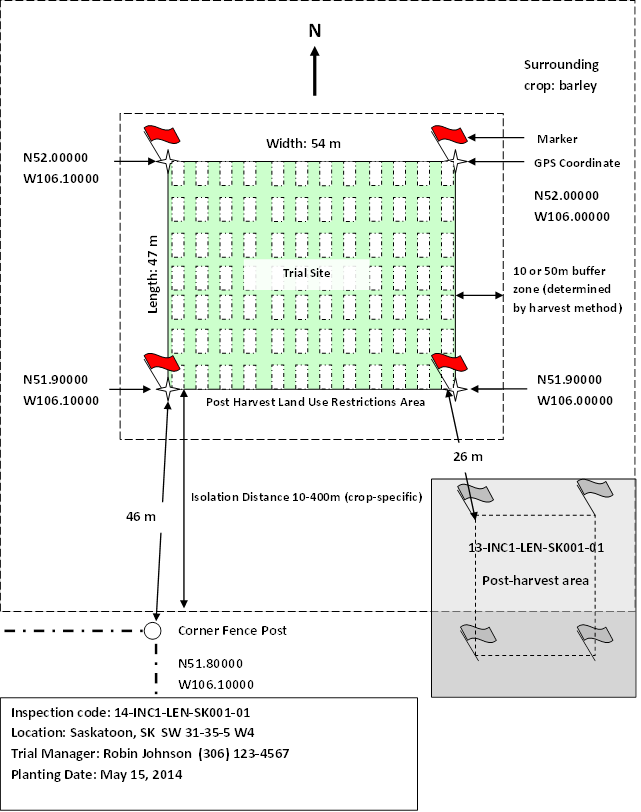
Description for Trial site diagram
The image is an example diagram of a trial site, buffer zone and isolation distance as viewed from above. The image consists of a centre square indicating the trial site, with a surrounding square border indicating the buffer zone and finally a largest outer square indicating the isolation distance. The trial site square has red flags at the corners and arrows with example GPS coordinates. Along the length and height of the square, distance measurements indicate the size of the example trial site (54 m by 47 m). There are descriptions of the flags at the corner of the trial site as "marker" and "gps coordinates". The space between the trial site and outer square is identified as the "10 or 50m buffer zone as determined by harvest method". The space between the buffer zone and isolation distance squares contains the text "Surrounding Crop: Barley" as well as "Isolation Distance 10-400m (crop-specific)". Outside of the isolation zone square, in the bottom left of the image, there is a small horizontal dotted line which meets a small circle and a vertical dotted line which extends downwards to the bottom of the image. This represents a fence with a post at the corner. There are example GPS coordinates for the fence post (small circle). An arrow from the south west corner marker of the trial site square is extended down to the small circle which indicates the fence post. This arrow is labelled as 46m, indicating the distance between the two. Also, at the bottom of the isolation zone square, in the bottom right side of the image, there is a small grey square representing a post-harvest area, with grey flags at the corners. There is a slightly larger grey square around this post-harvest site square. There is a small arrow connecting the north west corner of the post-harvest area site and the south east corner of the trial site, with 26 m indicating the distance between these two points. The grey post-harvest area is labelled with "13-INC1-LEN-SK001-01 Post-Harvest Area". At the very bottom of the page, there is a box containing the following information "Inspection code: 14-INC1-LEN-SK001-01, Location: Saskatoon, SK, SW 31-35-5W4, Trial Manager: Robin Johnson (306) 123-4567, Planting Date: May 15, 2014"
Appendix VII Non-compliance and corrective actions
The information in this appendix is provided for illustrative purposes only. Each situation of non-compliance will be treated on a case-by-case basis. It is solely the applicant's responsibility to ensure compliance with the terms and conditions of authorization, including the conduct of any subcontractors.
The responses to non-compliances are often determined by the growth stage of the plants that are found. In order to maintain a time buffer and minimize risk, please note that PBO considers any plants with flowers as "flowering", regardless if the plants reached anthesis or pollen shed. Similarly, PBO considers that any plants with seed have reached "seed set" no matter if the seeds are still immature.
| Situation | Interpretation and Possible Corrective Actions |
|---|---|
| Commercial crop of same or related species growing within isolation distance of PNT trial. |
If PNT trial is flowering concurrently with the commercial crop, the crop will need to be destroyed (e.g. mown, plowed) to a distance equivalent to the isolation distance for the PNT trial. This must be done prior to seed set of the commercial crop. If commercial crop has already set seed, an area equivalent to the isolation distance may be destroyed and included in the post-harvest restriction area.Table Note 3 If this problem is detected prior to flowering of the trial plants, the applicant may choose to destroy the PNT trial, however, post-harvest restriction of the site will still apply. The current year will be counted as the first year of post-harvest. |
| Volunteers (i.e. plants of the same species) found within isolation distance. |
If volunteers that have not reached seed set are found within the isolation distance, they must be destroyed before seed set.Table Note 4 If volunteers have set seed, the volunteer plant material must be destroyed and the area equivalent to the isolation distance may be subject to post-harvest restriction.Table Note 3 |
| Related species found within isolation distance |
If related species that have not reached seed set are found within the isolation distance, they must be destroyed before seed set.Table Note 4 If related species have set seed, the related species plant material must be destroyed and the area equivalent to the isolation distance may be subject to post-harvest restriction.Table Note 3 |
| Related species found within the trial site |
If related species that have not reached seed set are found within the trial site, they must be destroyed before seed set.Table Note 4 If related species have set seed, they must be destroyed and additional post-harvest restrictions may be imposed. |
| Reproductive isolation cages surrounding PNT trial have gaps in netting, have related species surrounding PNT trial and touching the cage netting, or cages not set up prior to flowering of PNT trial. |
If cages surrounding PNT trial have gaps in the cage netting and trial is in flower all related species surrounding the trial site must be destroyed to the specified isolation distance prior to seed set.Table Note 4 If related species surrounding PNT trial are touching the cage netting these plants must be destroyed prior to seed set.Table Note 4 If cages are not erected prior to flowering of PNT trial, all related species surrounding the trial site must be destroyed to the specified isolation distance prior to seed set.Table Note 4 If surrounding related species have set seed, all related material within isolation distance must be destroyed and the area equivalent to isolation distance may be included under post-harvest restriction.Table Note 3 |
| Additional unauthorized trials planted. | If unauthorized trials are planted, the unauthorized trials must be destroyed immediately and the site will be subject to post-harvest restrictions. If the trial is destroyed prior to seed set, the current year will be counted as the first year of post-harvest. |
| Situation | Interpretation and Possible Corrective Actions |
|---|---|
| Volunteers or related species that are not flowering present on trial site, including the buffer zone (10 or 50 metres). |
The plants must be destroyed before floweringTable Note 3 Spraying with herbicides may be done if growth stage of volunteers or related species is such that herbicide will be effective. If density is too high for roguing, the area must be mown (or plowed under). |
| Volunteers or related species that are flowering present on trial site, including the buffer zone (10 or 50 metres). | If volunteers are flowering, the isolation distance must also be monitored for the presence of the same or related species. If the same or related species are found within the isolation distance then these plants must be destroyed before seed set. If these plants have already set seed, the isolation distance may be subject to an additional period of post-harvest restriction, in that the period for post-harvest restriction may begin again.Table Note 3 |
| Volunteers or related species that have set seed present on trial site, including the buffer zone (10 or 50 metres). | If volunteers or related species are setting seed, the plant material from the trial site and any of the same or related species within the isolation distance must be destroyed. In addition, the trial site and the isolation distance, if applicable, may be subject to an additional period of post-harvest restriction, in that the period for post-harvest restriction may begin again.Table Note 3 |
| A crop of the same plant species as the PNT trial has been planted on the trial site (including the buffer zone) and detected prior to flowering. | Since PNT volunteers will most likely be present during this period and roguing of these will be impossible, the entire trial area must be destroyed prior to crop flowering. |
| A crop of the same plant species as the PNT trial has been planted on the trial site (including the buffer zone) and detected during flowering but prior to seed set. | If the crop is flowering the trial area must be destroyed immediately and the isolation distance must be monitored for the presence of the same or related species. If the same or related species are found within the isolation distance then these plants must be destroyed before seed set. |
| A crop of the same plant species as the PNT trial has been planted on the trial site (including the buffer zone) and detected after the plants have seed set. | If crop has set seed, the plant material must be destroyed immediately and both the trial and the isolation distance will be subject to an additional period of post-harvest restriction, in that the period for post-harvest restriction may begin again.Table Note 3 |
Table Notes
- Table Note 3
-
On a case-by-case basis, PBO may decide to adjust the area that will be included under post-harvest restrictions depending on where the prohibited plants were found.
- Table Note 4
-
Technically, this situation is not a non-compliance, but has a high potential to lead to non-compliance.
- Date modified: