
Common crupina - Crupina vulgaris
Weed Seed - Common Crupina (Crupina vulgaris)
Common crupina is an invasive plant that contaminates hay and other forage crops, significantly reducing their quality. It decreases the productivity of crops and other plants and livestock, therefore reducing their value. The plant also infests grasslands and open forest sites, where it can form dense stands and compete with native plant species.
Where it's found
Common crupina has not been found in Canada. Presently, it can be found in areas of the north-western United States. It is very adaptable and grows in pastures, grasslands, rangelands, hayfields, roadsides, railroads and dump sites.
What it looks like
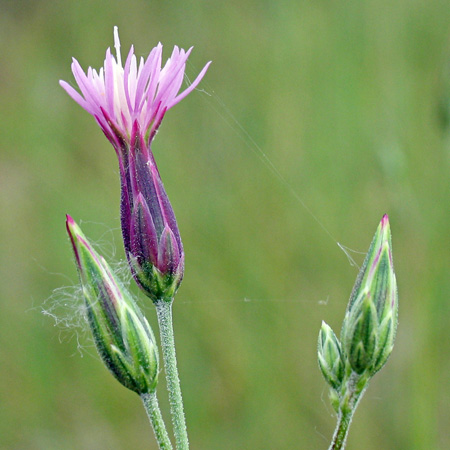
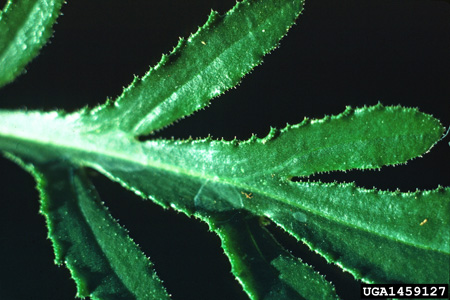
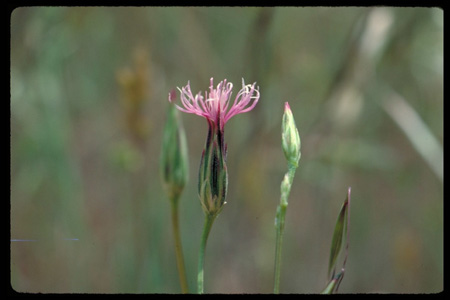
Common crupina can grow up to approximately 1 m tall. Its leaves have coarse, rough edges and the older leaves are prickly to the touch. The flowers are pinkish-purple and measure about 1.3 cm long.
How it spreads
Common crupina seeds generally fall only a few metres away from the parent plant. However, seeds can be transported with animal and human movement (including machinery), in soil, and in contaminated hay, grain and seed lots.
Legislation
Common crupina is regulated as a pest in Canada under the Plant Protection Act. It is also listed as a prohibited noxious weed on the Weed Seeds Order, 2016 under the Seeds Act. Importation and domestic movement of regulated plants and their propagative parts is prohibited.
What you can do about it
- Use clean hay, grain and straw.
- Maintain healthy and diverse pastures.
- Use clean, high-quality seed that is certified if possible.
- Contact your local Canadian Food Inspection Agency (CFIA) office if you suspect you have found this invasive plant. The CFIA will follow up and determine if further action is needed.
Learn more about invasive species.
© www.stammer.nl
Utah State University Archive
(Bugwood.org.jpg)
Attribution: Douglas Barbe, California Department of Food and Agriculture (CDFA), 2001
- Date modified: